May 08, 2012


REACHING THE PAST WITH TWO PARTICLES ENTANGLEMENT, IN A TWITTING MODE


If I could entangle two particles by sending one single photon through a 50/50 beam splitter, perhaps I could send letters to the past.


If that were the case I would like to send a hand written note to Napoleon Bonaparte explaining that Marshall Grouchy had become lost. So, the powerful Prussian Army commanded by Marshall Blucher, would be falling upon him soon during the Battle of Waterloo.
https://blogger.googleusercontent.com/img/b/R29vZ2xl/AVvXsEheYMNpFMUUoCTqtgqEwJDveBuJnEEqwS0_Emi8Yqyq04M9Cl93zHtlJxPg-BDLJd8VfybnXpt3vLLnyjo25jLghGb-6GdwcSs4CBRu1lxUZ7MEtD9gcQYyojehwXNDNVoLzG4N9UTJlmfz/s1600/battle+waterloo.jpg

I would send a message to Julius Cesar, with a carrier pigeon, asking him not to dismiss the Ides of March and to go to the Capitol only surrounded by his Praetorian Guards.
http://limpingmessenger.files.wordpress.com/2011/05/cesar-sa_mort.jpg

I would ask Romeo not to drink the poison given by Friar Laurence because Juliet was not dead, but just simply sleeping. (Romeo and Juliet. Act 5 Scene 3)http://www.rsc.org.uk/images/content/Photo_Galleries-2009_earlier/rom_0406_gallery_13.jpg

I will send a telegram to Queen Boudicca asking her not to place her army wagon train in a crescent at the end of the field, during the Battle of Watling Street. Tactics are superior to numbers. But tactics and numbers are undefeatable.
http://x372sailor.smugmug.com/Europe-Trip-2009/London-England/3007213CS4/824597350_czzhj-L.jpg

I will send an email to consul Scipio Aemilianus asking him not to cry for Troy, during the capture of Carthage; but for the destiny of the city of Berlin.
http://en.academic.ru/pictures/enwiki/67/Continence_of_Scipio_mg_0095.jpg

I would send a tweet to Francis Scott Fitzgerald (@francisscottfitzgerald) asking him not to leave the Great Gatsby, in his swimming pool, exposed to the bullets of unfortunate George Wilson. But the plot required it and only Death can give immortality.
http://www.sheilaomalley.com/archives/fitzgerald.jpg


.
. Ahora en Castellano


. .
.

February 01, 2012

.
.
.
.
.

TWEETS AS HIGGS PARTICLES
.
from


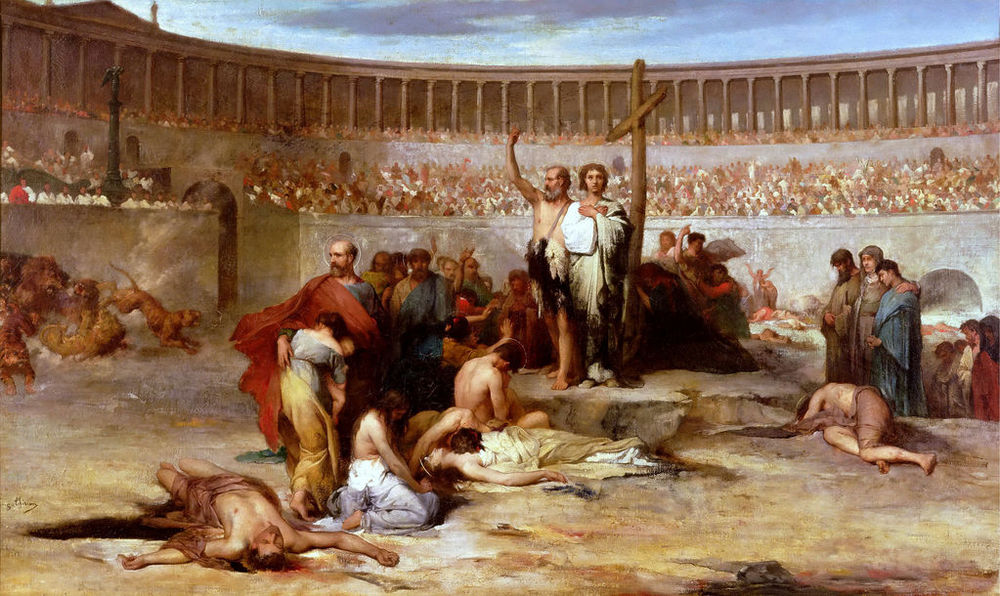
If I could travel to the farthest regions of the universe, among countless Higgs Bosons, faster than light could go, I would turn a telescope towards this earth ...


... and perhaps I will see insatiable lions attacking Christian martyrs at a Roman Colosseum. 
http://images.rapgenius.com/c9dbbe517cb807cb7c09f67ebfa81357.1000x596x1.jpg


Maybe, in a stroke of luck, I will find David showing Goliath's lifeless head: http://socialpsychol.files.wordpress.com/2011/09/david_showing_goliaths_head_caravaggio_1605.jpg?w=949


Or perchance I will see this man screaming with indignation because he had been chosen to be the last victim of the nuclear holocaust:
http://lisettewillemsen.files.wordpress.com/2011/09/the-desperate-man.png


Manuel Lasso
.
.
.
.

January 28, 2012

.
.
.
.


Escribió en Yalta uno de sus cuentos más famosos: Dama con perro faldero.
He wrote in Yalta one of his most famous stories: Lady with a lapdog. http://fc06.deviantart.net/fs41/f/2009/049/2/b/A_Lady_and_her_Dog_wallpaper_by_olde_fashioned.png

En su último día de vida se encontraba con su esposa, Olga Knipper, en los baños termales de Badenweiler.
During the last day of his life he was with his wife, Olga Knipper, in the spa town of Badenweiler.
https://blogger.googleusercontent.com/img/b/R29vZ2xl/AVvXsEjys2d3heDqiN6qMF8Oei1YCZyBXh6CUPkVR2Fojj7ax3Xy3lK0H4qltJ-N6d6kxQZ-SzzTlzFKF5DrUi8RZ1OHm_RSP9VWP4OQKBsmsvurB_hpmZ3MjhmbQh0XaUnAYsyTDP-xtp9qWLDJ/s1600/thermalbath+%25281%2529.jpg


La tuberculosis lo había consumido por muchos años. En el momento final, tuvo un ataque de ansiedad.
He had been suffering from tuberculosis for many years. At the last moment, he had a bout of restlessness.


Su médico alemán lo tranquilizó. "Es is gut. Es ist gut," le dijo y lo inyectó con camfor.
His German doctor calmed him down. "Es ist gut. Es ist gut," he said and injected him with camfor. http://www.medicantica.com/EN/Syringe/Pravaz_Syringe_app/Pravaz_Syringe5.jpg
Luego ordenó traer tres copas de champagne.
Then he ordered three glasses of champagne.

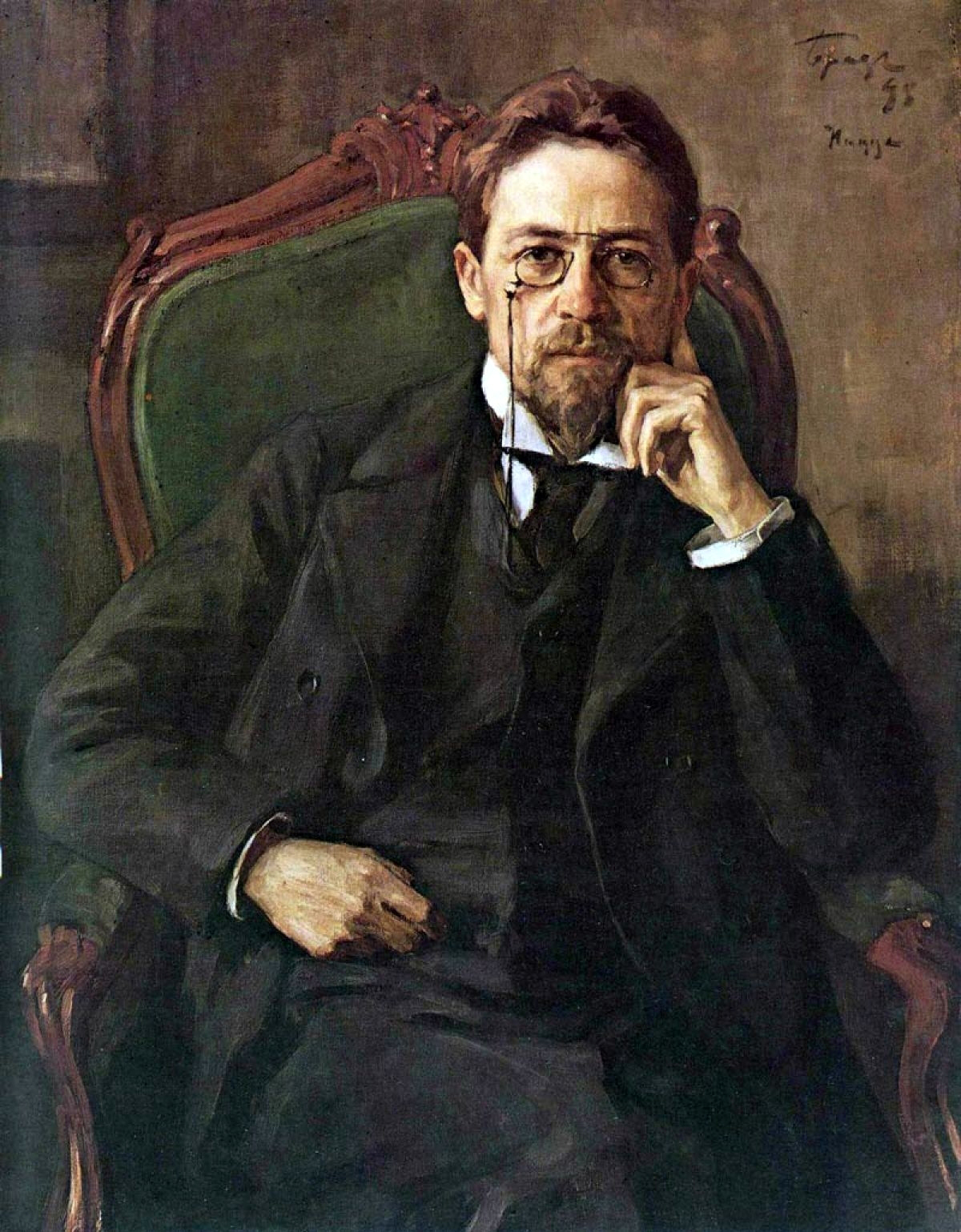
Anton Chejkov terminó de beber su copa y comentó acerca del champagne. Se acostó de lado y quietamente dejó de respirar.
Anton Chejkov finished drinking his glass and commented about the champagne. He leaned on his side and quietly stopped breathing. http://upload.wikimedia.org/wikipedia/commons/e/e9/Chekhov_1898_by_Osip_Braz.jpg


Manuel Lasso

NO NUCLEAR WEAPONS
NO ATOMIC REACTORS
NO RADIOIMMUNOASSAY WASTE
.
.
.
.
.
Highly recommended.
.
.
.
.
.
.
.
.

December 29, 2011

.
.
.
.
CARTA A SARA BEATRIZ GUARDIA
.
Mi querida Sara Beatriz:

          Hoy, después del desayuno, mientras colocaba un plato de loza dentro de la lavadora recordé que los españoles que ocuparon la ciudad de Lima en el siglo XVII también habían usado escudillas similares, probablemente más finas y mejor decoradas, porque durante esa época acostumbraban a traer sus vajillas desde el lejano Oriente. Para tanto y para más daban las encomiendas.

          Pensé que al tocar las fuentes, las tazas y los jarros, ellos habían sentido lo que nosotros percibimos, incluyendo las emociones y pasiones, porque la humanidad fue la misma. Un trago de agua traída por cañerías desde el manantial de Cacahuasi hasta la Caja de Agua de Santo Tomás era idéntico al trago de agua que yo bebí durante mi infancia. Igual tenía que suceder con el sabor de un buen sancochado o un cocido madrileño, con un beso de la mujer amada antes de entrar al ruedo, con la profunda apacibilidad que se siente al recibir el Santo Sacramento, con la ira que despierta una injuria y con la dureza de la empuñadura de la espada al empezar el duelo.

          Pero no quedó ningún testimonio. Porque no se puede dejar una atestación si no se la escribe o se la registra de algún modo. También padecieron el miedo que aparece al estar próximos a la muerte en una cama del hospital de San Andrés, con la respiración estertorosa de la agonía y luego, durante el último instante, cuando se cae en la inconsciencia antes de ser envueltos en una mortaja blanca y ser cargados por la calle por dos ayudantes indios hasta el campo santo de la iglesia de Santa Ana.
          En la época de Santa Rosa y de San Martín de Porres, el cementerio quedaba dentro de la iglesia donde ahora se encuentran las bancas con los reclinatorios. Se alquilaba una sepultura por el lapso de doce meses. Si había dinero los deudos renovaban el alquiler por más tiempo. Cuando ya no podían pagar más los enterradores removían los huesos y preparaban el terreno para recibir a un nuevo difunto. Tal como sucede en el Acto V, escena I de Hamlet, en que los enterradores sacan la calavera de Yorick y el príncipe danés reflexiona sobre la fragilidad de la vida.

          Los más ricos se hacían enterrar alrededor del altar. Hubo un ricachón que tenía unas papadas enormes alrededor del cuello y una pierna vendada todo el tiempo porque sufría de gota, que se vestía como el microscopista Antonie van Leeuwenhoek y que quizo ser enterrado debajo del altar, para estar muy cerca de Dios. Para esto triplicó la suma de la renta anual y puso en la mesa suficiente cantidad de dinero como para que el alquiler durara un siglo. Pero el santo jesuita que hacía las misas se indignó con tal propuesta y ordenó al sacristán y a sus asistentes que lo arrojaran a la calle y lo dejaran tirado a vista y paciencia de todos, muy cerca de lo que es hoy en día la Plaza Italia o Plaza Raymondi, con su vestidura parda y su peluca rubia, larga y ondulada como las que usaban los aristócratas franceses del siglo XVII. Sólo después de las gestiones del Arzobispo de Lima y las recomendaciones del Virrey se ordenó al noble religioso que permitiese un enterramiento que estuviese lo más cerca posible del altar, distancia que fue medida con la cinta métrica de un sastre andaluz. La suma ofrecida pasó a los cofres reales. De esa manera el sacristán y sus ayudantes tuvieron que recoger al pesado occiso y rescatarlo de unos gallinazos, de cuello y cabezas negras, que habían abandonado la cúpula de la iglesia y que muy emocionados, abriendo las alas, saltaban a su alrededor con unas ganas de devorarlo de cuerpo entero y lo enterraron en el lugar indicado.

          Durante esa época ingresar a la iglesia para escuchar la Santa Misa, era como entrar a un lugar de pesadillas de los tiempos de Mary Shelley o como meter el pie en el Infierno del Dante, porque habían ceras encendidas y flores secas de los pobres difuntos enterrados por todos lados. Y así, de pie, entre el olor de los sahumerios y los recuerdos de los difuntos había que escuchar la Santa Misa, tratando de no pisar sobre las sepulturas de los que ya habían partido al otro mundo. A los clérigos les gustaba este escenario porque les servía para hacer recordar a la cariacontecida y atemorizada feligresía que la visita a este mundo terrenal era precaria y temporal y que después del venerable sacerdote sólo se encontraba Dios y nadie más que Dios.


          Con un gran abrazo
          Manuel

.
.
LETTER TO SARA BEATRIZ GUARDIA
.
Dear Sara Beatriz:

          Today, after breakfast, while placing the stoneware dishes inside the washing machine I realized that the Spaniards who lived in the city of Lima in the XVII century used similar plates, but probably finer and better decorated, because during those times they used to bring them from the Far East. The encomiendas provided for it and for more than that.
.
          I thought that when they touched those cups and jugs, they had to feel the same. They had to notice what we perceive, including the emotions and passions, because humanity was alike. The water brought from the Cacahuasi springs to the Water Deposit of Santo Tomas had to be identical to the water I drank during my childhood. The same had to happen with the taste of the sancochado or the cocido madrileño, with the kiss of the beloved woman, with the deep peacefulness felt while receiving the Holy Sacrament, with the wrath raised by an insult and with the hardness of the sword handle before the beginning of a duel.
.
          But no testimony had been left about this. Because no attestation can be passed to posterity if it has not been written or registered in some way. They also were aware of the fear that rises when one is dying on a San Andres hospital bed , with the stertorous breathing of the agony and when one plunges into unconsciousness before being wrapped in a white shroud and carried away by two Indian assistants to the cemetery of the Santa Ana Church.
.
          During the times of Saint Rose of Lima and Saint Martin de Porres, graveyards were located within the church grounds, where the pews are placed now. A sepulcher was rented for twelve months. If there was enough money the relatives could renew the rent for a longer period of time. When they could not pay anymore, the grave makers removed the bones and prepared the earth to receive a new deceased. As it happens in the Act V, Scene I of Hamlet, when the gravediggers disinter Yorick's skull and the Danish prince reflects over the fragility of life.
.
          The rich had themselves buried around the altar. There was an affluent citizen, with a monstrous double-chin and a bandaged leg because he suffered from gout, majestically dressed like the microscopist Antonie van Leeuwenhoek, who wanted to be entombed underneath the altar. To accomplish this, he tripled the sum of the annual rent and put on the table sufficient amount of money for a century lease. But the holy Jesuit, who said the dominical Mass, felt slighted with such a proposal and furiously ordered the altar boy and his assistants to throw him onto the street and leave him there until he would rot, very near to Plaza Italia or Plaza Raymondi, with his brown coat and his blond, long and wavy wig, like the ones used by the French aristocrats of the XVII century. Through the efforts of the Archbishop of Lima and the considerations of the Viceroy, the noble clergyman allowed an interment that was the closest to the altar, with a distance quantified by the measuring tape of an Andalusian tailor. The offered money went into the royal coffers. In that way the altar boy and his assistants lifted the heavy body of the rich merchant and rescued it from the gallinazos which, with their featherless black heads and necks, had descended from the dome of the church and very enthusiastically, opening their wings, were jumping around with the sincere desire of devouring the whole body in one single bite.
.
          During that epoch entering the church to attend the holy Mass, was like setting foot in a nightmarish place from the times of Mary Shelley or coming into the Hell of Dante, because there were lighted candles and dry flowers left for the interred people all over the place. Thus, standing up, among the scent of the sahumerios and the memories of the ones who had gone belly up, the parishioners had to listen to the religious services, trying not to step on the graves of the departed. The ecclesiastics liked this scenario because it helped them in reminding the churchgoers that the visit to this world was only temporary and that after the priest there was only one God and nothing else but one God.
.
          Wishing you the best,
.
          Manuel


December 25, 2011

. . . . .
"Lo único incambiable que conozco es que todo tiempo presente es cambiable. No existe tiempo presente que mañana no será diferente."

. .
"The only unchangeable fact that I know is that all present time is changeable.
There is no present time that will not be different tomorrow. "
 
Manuel Lasso 
from Lima-Peru
.
.

July 25, 2011

.
.
.
.
.


FROM THE FRAM, NORWAY,


.
IN HER DARKEST HOUR

.


From: cecilie.landsverk@mfa.no
To: PRVASQ131195@aol.com (Manuel Lasso)
Sent: 7/25/2011 3:13:15 A.M. Central Daylight Time
Subj: FW: Condolences

Dear Sir,
On behalf of the Norwegian people, I would like to thank you warmly for your expressed support regarding the terrible crimes in Oslo and on Utøya on Friday 22 July. At the Norwegian Embassy in Ankara we are most grateful and moved by all the condolences and warm messages received. I can assure you that all of them will be conveyed to Oslo and the Norwegian people.

Norway finds itself in deep grief after the attack on innocent young people and the attack our democracy. We are deeply shocked by the scale of this National catastrophe and we mourn the loss of so many lives.

The Norwegian Foreign minister, Mr. Jonas Gahr Støre, has expressed that politically motivated violence is a threat to our society, however, we cannot accept that this attack will ruins us. Our values and what we believe in will continue to be the backbone of our society. The Minister has said that tomorrow’s Norway will be recognizable, - nobody shall be able to dismantle our values and our democracy.

Please find the link to Prime Minister, Mr. Jens Stoltenberg’s speech at the memorial ceremony in Oslo Cathedral on Sunday, 24 July.
http://www.regjeringen.no/nb/dep/smk/aktuelt/taler_og_artikler/statsministeren/statsminister_jens_stoltenberg/2011/tale-ved-statsminister-jens-stoltenberg-.html?id=651789

Regards,

Cecilie Landsverk
Ambassador

.


.
Speech by Prime Minister Jens Stoltenberg in Oslo Cathedral

Deres Majesties,
Akjære all together, it is now nearly two days since Norway was hit by the greatest atrocity since the war. At Utøya and at Oslo. It feels like an eternity. There have been hours, days and nights filled with shock, despair, anger and tears. Today it is time for sorrow.On these days we should allow ourselves to stop it. Honor the dead.
92 human lives are lost. Several are still missing. Any and all of those who have passed away is a tragedy. Taken together, the loss is a national tragedy. We are striving to comprehend the scope. All of us knew someone who is gone. Even more know of any. One of them was Monica. For 20 years, she worked at Utøya. For many of us, she was Utøya. Now she is dead. Shot and killed while she watched for the care and safety of young people from across the country. Her husband John and daughters Victoria and Helene are in Drammen church today. This is so unfair. Please know that we weep with you. Others are gone, Tore Eikeland. Leader of AUF in Bergen and one of our most talented young politicians. We remember that he got all the national congress of the Labour Party to cheer when he was a dedicated post on the EU postal directive, and won. Now he's dead. Gone forever. It is not understandable. These are two of those we have lost. We have lost many others, in the Utøya and government building. It did not tarnish our name and image at all. When the extent of the evil emerge in all its horror. There will be a new trial. We will manage it well. Despite all this tragedy, I am proud to live in a country that has managed to rise at a critical time. Everyone is impressed with how much dignity, care and strength we have met this tragedy. We are a small country but we are a proud people. We are still shaken by what hit us, but we never give up our values. The answer is more democracy, more openness and more humanity. But never naivety. No one could have said it nicer than the AUF girl who was interviewed by CNN: "If one man can see so much hate, think how much love we can all see together." To end, let me say to the families across the country who have lost a loved one: Receive my and all of Norway's deepest sympathy in your grief. Just that. The whole world is with you. I have promised to convey condolences to you from Barack Obama, Vladimir Putin, Frederik Reinfeldt, Angela Merkel, Nothing can never replace the loss. Nothing can bring the loved ones back. Certainly we need support and consolation when life is at its darkest moment. Life is at its darkest hour for you now. Let it be know that we are there for you.
.


Manuel Lasso


.
.
.

June 30, 2011

.
.
.
.

BORGES EN EL RECUERDO
.
por Manuel Lasso
.
.
La última y única vez que hablé con Borges fue en la Capilla de la Madonna della Strada en la Universidad de Loyola, a orillas del Lago Michigan, pocos meses antes de su muerte. Se encontraba bastante avanzado en su evolución humana de modo que lo tuvieron que llevar casi cargando a la mesa de conferencias y en medio de esa audiencia tan variada se le veía como a un gigante ancianísimo.
Tenía la apariencia de un caballero de los comienzos del siglo XX y por tal razón me hacía acordar de mi abuelo Nicanor porque llevaba el mismo estilo de peinado, hacia atrás, como se usaba en esos tiempos y se apoyaba en un bastón, levantando el mentón. Aún sus expresiones coloquiales eran similares a las que yo había observado en el padre de mi progenitor.

Traigo a la memoria con mucha claridad el saludo que le dio a uno de los asistentes y es tan nítida esta reminiscencia que hasta me parece estarlo escuchando en este momento, sonríendo y apoyando las manos sobre el mango de su brillante bastón:
"Que bien que estamos, ¿verdad?"

Hice todo esfuerzo posible por aproximarme y hablarle porque sabía que no habría otra oportunidad. Lo rememoro platicando sobre The sound and the fury de William Faulkner que por alguna razón parecía despertarle una inmensa satisfacción; pero lo que evoco con más nitidez es la respuesta que dio a una pregunta de los estudiantes:
"Borges, ¿qué consejos le podría dar a los jóvenes de hoy?"
Y él, con una voz muy frágil y apagada, casi como si le estuviese hablando al oído, respondió:
"El mismo consejo que me dio mi padre. No se apresuren por publicar... Recuerden que por la imprenta perecerán..."
Cierto tiempo después, luego de algunos años, cuando me encontraba leyendo un cuento de Pushkin tuve la sensación de estar percibiendo a Borges. Me pareció algo inusitado e increíble, en ese instante, pasar por las líneas de Pushkin y tener la impresión de estar leyendo a Borges. Indudablemente era algo imposible, porque Aleksander Pushkin nació cien años antes, en 1799 y murió en un duelo, siendo muy joven, en 1837. Por lo tanto tenía que ser al revés. Cuando se leía a Borges se tenía que tener la impresión de estar leyendo a Pushkin.
Jorge Luis Borges siempre reconoció al narrador ruso como a uno de los autores que más habían influenciado en su desarrollo artístico. Ahí entonces se encontraba la explicación.
A continuación los invito a leer esta versión del cuento El disparo
http://www.apocatastasis.com/disparo-memorable-alexander-pushkin.php
que provocó en mi ese efecto memorable y a identificar los fragmentos, las líneas o los párrafos que podrían haber motivado dicha influencia.


.

REMEMBRANCES OF BORGES
.
The last time I spoke with Jorge Luis Borges was at the Chapel of la Madonna della Strada, at the University of Loyola, by the shore of the Lake Michigan, a few months before his demise.
He was very advanced on his evolution, so he had to be carried to the podium and within that diverse audience he seemed like a honorable Ancient. He had the appearance of a gentleman of the beginning of the XX century and because of that reason he reminded me of my grandfather Nicanor, who used the same hair style and the same necktie, as it was the fashion during those times. Even his colloquial expressions seemed similar to the ones I had observed on my ancestor.
I remember with unusual clearness the greeting he gave to one of the attendees. So lucid is that reminiscence that it seems to me that I am listening to him at this moment, smiling and holding the handle of his bright cane.
"How well we are doing, aren't we?"
I made all possible efforts to be near him because I knew there would not be another chance. I remember him talking about The sound and the fury which for some unknown reason seemed to be of his liking. However, what I remember most is the answer he gave to one of the students.
"Borges, what advice can you give to the young students?"
With a fragile and soft voice, he answered:
"The same advice my father gave me: Don't rush for publication. You may die by the print."
Some time afterwards, perhaps several years later, when I was reading a short story by Pushkin, I had the sensation of perceiving Borges style. It seemed incredible to pore over the lines of Pushkin and have the impresion that I was reading Borges. Undoubtedly that was something impossible, because Aleksander Pushkin was born a hundred years earlier, in 1799 and died in a duel, still young, in 1837. Therefore it had to be the reverse. When I was reading Borges I had to have the sensation of reading Pushkin.
Jorge Luis Borges always considered the Russian poet as one of the authors who had influenced on his artistic development.
We invite you now to read the short story The shot
http://gaslight.mtroyal.ab.ca/TheShot.htm
which produced on me such a memorable effect.
.
.


Biografía y Textos de Manuel Lasso en:
http://www.letralia.com/firmas/lassomanuel.htm
.

.
.
.

  La Verónica viene el viernes Manuel Lasso   martes 28 de octubre de 2025 ¡Comparte esto en tus redes sociales! Facebook X LinkedIn Threads...