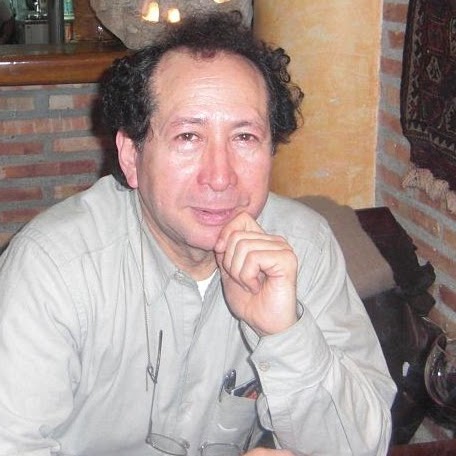
July 25, 2011

.
.
.
.
.


FROM THE FRAM, NORWAY,


.
IN HER DARKEST HOUR

.


From: cecilie.landsverk@mfa.no
To: PRVASQ131195@aol.com (Manuel Lasso)
Sent: 7/25/2011 3:13:15 A.M. Central Daylight Time
Subj: FW: Condolences

Dear Sir,
On behalf of the Norwegian people, I would like to thank you warmly for your expressed support regarding the terrible crimes in Oslo and on Utøya on Friday 22 July. At the Norwegian Embassy in Ankara we are most grateful and moved by all the condolences and warm messages received. I can assure you that all of them will be conveyed to Oslo and the Norwegian people.

Norway finds itself in deep grief after the attack on innocent young people and the attack our democracy. We are deeply shocked by the scale of this National catastrophe and we mourn the loss of so many lives.

The Norwegian Foreign minister, Mr. Jonas Gahr Støre, has expressed that politically motivated violence is a threat to our society, however, we cannot accept that this attack will ruins us. Our values and what we believe in will continue to be the backbone of our society. The Minister has said that tomorrow’s Norway will be recognizable, - nobody shall be able to dismantle our values and our democracy.

Please find the link to Prime Minister, Mr. Jens Stoltenberg’s speech at the memorial ceremony in Oslo Cathedral on Sunday, 24 July.
http://www.regjeringen.no/nb/dep/smk/aktuelt/taler_og_artikler/statsministeren/statsminister_jens_stoltenberg/2011/tale-ved-statsminister-jens-stoltenberg-.html?id=651789

Regards,

Cecilie Landsverk
Ambassador

.


.
Speech by Prime Minister Jens Stoltenberg in Oslo Cathedral

Deres Majesties,
Akjære all together, it is now nearly two days since Norway was hit by the greatest atrocity since the war. At Utøya and at Oslo. It feels like an eternity. There have been hours, days and nights filled with shock, despair, anger and tears. Today it is time for sorrow.On these days we should allow ourselves to stop it. Honor the dead.
92 human lives are lost. Several are still missing. Any and all of those who have passed away is a tragedy. Taken together, the loss is a national tragedy. We are striving to comprehend the scope. All of us knew someone who is gone. Even more know of any. One of them was Monica. For 20 years, she worked at Utøya. For many of us, she was Utøya. Now she is dead. Shot and killed while she watched for the care and safety of young people from across the country. Her husband John and daughters Victoria and Helene are in Drammen church today. This is so unfair. Please know that we weep with you. Others are gone, Tore Eikeland. Leader of AUF in Bergen and one of our most talented young politicians. We remember that he got all the national congress of the Labour Party to cheer when he was a dedicated post on the EU postal directive, and won. Now he's dead. Gone forever. It is not understandable. These are two of those we have lost. We have lost many others, in the Utøya and government building. It did not tarnish our name and image at all. When the extent of the evil emerge in all its horror. There will be a new trial. We will manage it well. Despite all this tragedy, I am proud to live in a country that has managed to rise at a critical time. Everyone is impressed with how much dignity, care and strength we have met this tragedy. We are a small country but we are a proud people. We are still shaken by what hit us, but we never give up our values. The answer is more democracy, more openness and more humanity. But never naivety. No one could have said it nicer than the AUF girl who was interviewed by CNN: "If one man can see so much hate, think how much love we can all see together." To end, let me say to the families across the country who have lost a loved one: Receive my and all of Norway's deepest sympathy in your grief. Just that. The whole world is with you. I have promised to convey condolences to you from Barack Obama, Vladimir Putin, Frederik Reinfeldt, Angela Merkel, Nothing can never replace the loss. Nothing can bring the loved ones back. Certainly we need support and consolation when life is at its darkest moment. Life is at its darkest hour for you now. Let it be know that we are there for you.
.


Manuel Lasso


.
.
.

June 30, 2011

.
.
.
.

BORGES EN EL RECUERDO
.
por Manuel Lasso
.
.
La última y única vez que hablé con Borges fue en la Capilla de la Madonna della Strada en la Universidad de Loyola, a orillas del Lago Michigan, pocos meses antes de su muerte. Se encontraba bastante avanzado en su evolución humana de modo que lo tuvieron que llevar casi cargando a la mesa de conferencias y en medio de esa audiencia tan variada se le veía como a un gigante ancianísimo.
Tenía la apariencia de un caballero de los comienzos del siglo XX y por tal razón me hacía acordar de mi abuelo Nicanor porque llevaba el mismo estilo de peinado, hacia atrás, como se usaba en esos tiempos y se apoyaba en un bastón, levantando el mentón. Aún sus expresiones coloquiales eran similares a las que yo había observado en el padre de mi progenitor.

Traigo a la memoria con mucha claridad el saludo que le dio a uno de los asistentes y es tan nítida esta reminiscencia que hasta me parece estarlo escuchando en este momento, sonríendo y apoyando las manos sobre el mango de su brillante bastón:
"Que bien que estamos, ¿verdad?"

Hice todo esfuerzo posible por aproximarme y hablarle porque sabía que no habría otra oportunidad. Lo rememoro platicando sobre The sound and the fury de William Faulkner que por alguna razón parecía despertarle una inmensa satisfacción; pero lo que evoco con más nitidez es la respuesta que dio a una pregunta de los estudiantes:
"Borges, ¿qué consejos le podría dar a los jóvenes de hoy?"
Y él, con una voz muy frágil y apagada, casi como si le estuviese hablando al oído, respondió:
"El mismo consejo que me dio mi padre. No se apresuren por publicar... Recuerden que por la imprenta perecerán..."
Cierto tiempo después, luego de algunos años, cuando me encontraba leyendo un cuento de Pushkin tuve la sensación de estar percibiendo a Borges. Me pareció algo inusitado e increíble, en ese instante, pasar por las líneas de Pushkin y tener la impresión de estar leyendo a Borges. Indudablemente era algo imposible, porque Aleksander Pushkin nació cien años antes, en 1799 y murió en un duelo, siendo muy joven, en 1837. Por lo tanto tenía que ser al revés. Cuando se leía a Borges se tenía que tener la impresión de estar leyendo a Pushkin.
Jorge Luis Borges siempre reconoció al narrador ruso como a uno de los autores que más habían influenciado en su desarrollo artístico. Ahí entonces se encontraba la explicación.
A continuación los invito a leer esta versión del cuento El disparo
http://www.apocatastasis.com/disparo-memorable-alexander-pushkin.php
que provocó en mi ese efecto memorable y a identificar los fragmentos, las líneas o los párrafos que podrían haber motivado dicha influencia.


.

REMEMBRANCES OF BORGES
.
The last time I spoke with Jorge Luis Borges was at the Chapel of la Madonna della Strada, at the University of Loyola, by the shore of the Lake Michigan, a few months before his demise.
He was very advanced on his evolution, so he had to be carried to the podium and within that diverse audience he seemed like a honorable Ancient. He had the appearance of a gentleman of the beginning of the XX century and because of that reason he reminded me of my grandfather Nicanor, who used the same hair style and the same necktie, as it was the fashion during those times. Even his colloquial expressions seemed similar to the ones I had observed on my ancestor.
I remember with unusual clearness the greeting he gave to one of the attendees. So lucid is that reminiscence that it seems to me that I am listening to him at this moment, smiling and holding the handle of his bright cane.
"How well we are doing, aren't we?"
I made all possible efforts to be near him because I knew there would not be another chance. I remember him talking about The sound and the fury which for some unknown reason seemed to be of his liking. However, what I remember most is the answer he gave to one of the students.
"Borges, what advice can you give to the young students?"
With a fragile and soft voice, he answered:
"The same advice my father gave me: Don't rush for publication. You may die by the print."
Some time afterwards, perhaps several years later, when I was reading a short story by Pushkin, I had the sensation of perceiving Borges style. It seemed incredible to pore over the lines of Pushkin and have the impresion that I was reading Borges. Undoubtedly that was something impossible, because Aleksander Pushkin was born a hundred years earlier, in 1799 and died in a duel, still young, in 1837. Therefore it had to be the reverse. When I was reading Borges I had to have the sensation of reading Pushkin.
Jorge Luis Borges always considered the Russian poet as one of the authors who had influenced on his artistic development.
We invite you now to read the short story The shot
http://gaslight.mtroyal.ab.ca/TheShot.htm
which produced on me such a memorable effect.
.
.


Biografía y Textos de Manuel Lasso en:
http://www.letralia.com/firmas/lassomanuel.htm
.

.
.
.

May 10, 2011


Manuel Gutiérrez Sousa: Itinerary of a little god


by Manuel Lasso


Vicente Huidobro's dictum, the poet is a little god, cannot be applied with more justice to no other than Manuel Gutiérrez Sousa and his literary work. His narrative gifts have already been observed in numerous articles published through several years in a Venezuelan newspaper and in his novel Thus Arturo told me, consecrated by the critic in a Valencian book fair upon receiving the Vicente Blasco Ibáñez prize. It surprises and pleases us to know that his creative talents are also noticed in the field of poetry, especially in his book Rails of Chimeras, in which he reveals us, through exuberant images, a search which ends in the conception of brilliant literary chimeras.

At the beginning of the book, when we cannot still understand the reality of things, we find a solitary traveler whose ferocious crossings takes us through uneven places where he finds the consolation of astrology. It is the case of a slimy savage, because all creation arises from the mud, who advances through unidentifiable places, sleeping outdoors. Perhaps it is a crazy being who lives without eating, dreaming around the fire.

In the middle of the reading when incertitude has entranced the reader, I came from the debris becomes a key poem because here the savage, seeker of words, foresees for the first time the chimeras that obsesses him. The reader discovers that the cruel journey, up to this moment without repose, aims to the attainment of a poem.

It is a fantastic trip in search of poetry. It is the pursuit of a literary achievement that avoids him. In his quest he advances through hell and madness. The monster creates symbols which unintentionally he drops on his path as trails and the reader has to pick them up before losing him. We find ourselves in the hunt of a little god who in its hallucinating exploration advances through wastelands and utter darkness, helping himself with the predictions of the stars, lighting the fire as a non human who charges with alienation and sacrifice stones, trying to augur the possible hiding-places of poetry.

In whistling rolls the sun we find another indication of his chimeras; the Inca sounds are the ones that touches him because he is a direct descendant of the Amarus and the Huaman Pomas. He knows that he possesses the fire of creation; but it is in the section The book of the four illuminated in which he sees dancing gods with masks and listens to the voices of invisible bulls.

Finally, in day three and when the mo
on breaks six tips he finds the sought images. There he discovers four resplendent poems.They are the sun crossing through the square, Ra living with Aton, Prometheus with Kufán, Inti with Neptune, Apollo with Tuyman. In these four poems the creator achieves the desired incandescence. They are poems of great lucidity that represent the salvation of the pursuer and his epiphany.

They constitute a succession of action and visual images, like the ones we can see in the worlds of Dalí and Yves Tanguy, that disturb us; but at the same time enlighten us. They indicate to us that the passionate journeying of Huidobro's little god has arrived to its destiny, to the consecution of his dreams.

In short, in Rails of Chimeras, Manuel Gutiérrez Sousa uses diverse images to show the stages and the process of the poetic creation, that starting in the darkness, in a wandering trip, arrives to the fullness of a literary brightness, to the discovery of its more obsessive and intimate chimeras.
..  


Manuel Gutiérrez Sousa: Itinerario de un pequeño dios

por Manuel Lasso

El dictum de Vicente Huidobro, el poeta es un pequeño dios, no se puede aplicar con más justicia que al caso de Manuel Gutiérrez Sousa y a su obra literaria. Sus dotes de prosista ya han sido advertidas en numerosos artículos publicados por varios años en un diario venezolano y en su novela Así me dijo Arturo, consagrada por la crítica en la Feria del Libro de Valencia al recibir el premio Vicente Blasco Ibáñez. Nos sorprende y complace saber que sus dotes creadoras también se observan en el campo de la poesía y en especial en su poemario Raíles de Quimeras, en el que a través de imágenes exuberantes nos revela una búsqueda que culmina en el logro de brillantes quimeras literarias... Al inicio de la lectura, cuando todavía no podemos comprender la realidad de las cosas, encontramos a un viajante solitario cuya travesía feroz nos lleva por lugares escabrosos donde encuentra el consuelo de la astrología. En realidad se trata de un salvaje enlodado, porque del lodo surge toda creación, que avanza por lugares no identificables, durmiendo a la intemperie; tal vez es un ser enloquecido que vive sin comer alrededor del fuego. A mitad de la lectura cuando la incertitud se ha poseído del lector, Yo venía de los escombros se convierte en un poema clave porque aquí el salvaje, buscador de vocablos, entrevee por primera vez a las quimeras que lo obsesionan. El lector descubre que la jornada cruel, hasta ese momento sin descanso, tiene como fin la consecución del poema... Es un periplo fantástico en busca de la poesía. Es la persecución de un logro literario que lo evade. En su indagación atraviesa por infiernos y locuras. El monstruo va creando símbolos que sin intención deja caer en su trayectoria como rastros y huellas que el lector tiene que recoger para poder seguirlo en su marcha antes de perderlo. Nos encontramos a la caza de un pequeño dios que en su exploración alucinada avanza a través de desiertos y tinieblas, ayudándose con las predicciones de las estrellas, encendiendo el fuego como un ser no humano que embiste por medio de las enajenaciones y de piedras de sacrificios tratando de adivinar los posibles escondites de la poesía..

En el sol rueda silbando encuentra otro indicio de sus quimeras; son los sonidos incaicos los que lo conmueven porque es descendiente directo de los Amarus y de los Huaman Pomas. Sabe que posee la candelita de la creación; pero es en la sección titulada El libro de los Cuatro Iluminados en la que ve a dioses con máscaras; los ve danzar y escucha las voces de los toros invisibles.

Finalmente algo sucede. En día tres y cuando la luna rompe seis puntas halla a las imágenes buscadas. Allí descubre cuatro poemas bien iluminados en los que encuentra a las quimeras. Es el cuadrado que deja pasar al sol. Ra conviviendo con Aton, Prometeo con Kufán, Inti con Neptuno, Apolo con Tuyman. Al fin en estos cuatro poemas el creador consigue el resplandor deseado. Son poemas de gran lucidez que representan la salvación del perseguidor y su epifanía... Constituyen una sucesión de imágenes fantásticas, visuales y de acción, como las que se ven en los mundos de Dalí y de Yves Tanguy, que nos inquietan y a la vez nos iluminan y nos indican que las correrías locas del pequeño dios de Huidobro han llegado a su término, a la consecución de unos sueños bien logrados.

En suma, en Raíles de Quimeras, Manuel Gutiérrez Sousa usa imágenes diversas para demostrar los estadíos y procesos de la creación poética, que partiendo de la oscuridad en un viaje errante llega a la plenitud de la luminosidad literaria, al descubrimiento de sus quimeras más obsesionantes e íntimas..


Manuel Gutiérrez Sousa (Krufú Orifuz)


UN NUEVO POEMA DE KRUFU ORIFUZ
(MANUEL GUTIERREZ SOUSA)


Responso a San Napo  a la Ascensión de la Luz
-el Santo de Camaná, de los olvidados, de los silenciosos-

                                     I
Quien ha vivido en los dos mundos, la realidad es una larga ficción
Y solamente es real el dolor y el hambre.
Los que hemos soportado la terrible soledad al buscar en las cosas
Algo que trascienda nuestra materia, horrorizados volvemos la mirada.
Este es el mundo que teníamos que vivir, si hubo suerte que la nutren los astros
La casa a la cual llegaste te bendiga, sino tendrás que repetir los hechos de orfandad
De Abel y ser víctima como sucedió antaño.
Has esperado tanto que la palabra dejó de tener sentido, era preferible guardarse en el silencio, que es el lenguaje de Dios.
Para ofrecer el reino innombrable a sus elegidos,
Así es Santo Hermano que has cruzado ya los dominios de esta realidad
Y luego de descender al vientre de la Madre Tierra quedas liberado de tu peso
Y de tu paso, en un momento de elevación que sobrepasa toda ciencia
Vuelas a las dimensiones frescas y luminosas donde los designios de lo Eterno
Son innumerables,
Y ahora podrás leer el dolor que mató tus días.
Al fin, para este puñado de años que es el caminar, tú has ganado la batalla
Porque te refugiaste en el Señor y no hubo temor en tu largo sufrir.

                                    II
Dice la madre tierra he recibido el cuerpo de un niño
Que llevó los sufrimientos de los hombres y su alma  se regocija en la Luz.
Nunca se quejó de sus males, era tan reservado y tímido que no sabía pedir el pan de cada día, tampoco molestó a Dios porque no quería quejarse,
Sólo sabía sufrir en silencio.
Ante su hermano estiraba la mano para recibir el pan que generaban sus bienes
Y le cerraban las puertas, como el Abel de hoy día, se quedaba con las manos abiertas
Que no agredieron a nadie.
Miraba el cielo sabiendo que de niño su madre le dijo que había un Dios
Y como no sabía pedir sólo miraba deseando que Dios hiciera su voluntad.
Era un santo, sí un Santo devuelto a la vida y él sabía sufrir, cerraba los ojos
Y se alimentaba de dolor, como Cristo se dolía y nadie velaba por él,
Dejó que Dios hiciera su voluntad de dolerse en él, y se guardó como un cofre
Para abrirlo en la Eternidad, quizás para decirle a Dios: mira el amor que te traigo,
Y así con hambre, sed, quemado por el sol de Camaná se presentó ante Dios
Para celebrar sus bodas en el mismo cielo.
El coro de ángeles cantaba con fuerza y decía: tuvo hambre y no le dieron de comer, tuvo sed y no le dieron de beber, muriendo dio su vida, como grano cayó en la tierra, murió y produjo muchos frutos,
Cuando alzó los ojos San Napo fue llevado a la fuente de agua y dijo: mírame Señor
Y reconoce mi interior, siempre fui tuyo y esperé pacientemente tu voz.
El Señor que todo lo puede abriendo las manos lo abrazó y lo llenó de su Eternidad. Así sea.


Foto del autor:


Manuel Gutiérrez Sousa
Filósofo, poeta y novelista peruano (Camaná, El Cardo, Arequipa). Estudió filosofía y letras en la Universidad Nacional de San Agustín, en Arequipa, y filosofía y sociología de las religiones en la Escuela de Estudios Superiores en Ciencias Sociales de París. Ha publicado Así me dijo Arturo (Premio Vicente Blasco Ibáñez, España), Los perros mueren en Cuba (Lima) y Los hijos del orden (Lima). Con el seudónimo “Krufú Orifús” publica poesía agrupada en el título Cantos de amor a la tierra (Lima).

.
Biografía y Textos de Manuel Lasso en:http://www.letralia.com/firmas/lassomanuel.htm
.


.


January 08, 2009

TRADUCCION DE UNA CARTA DE MONGOLIA

From: hadaa_takhi@yahoo.com (Hadaa Sendo)

Sent: 1/8/2009 12:05:57 A.M. Central Standard Time

Subj: Re: Invitation for Anti nuclear Poems

Querido amigo Manuel Lasso,

He leído más en Wikipedia acerca de su Certificado de Muerte de la Humanidad. Es un gran trabajo lleno de tristeza y amor. Realmente agradezco su pensamiento.
Debemos de condenar la guerra y llamar a la paz, aunque lo vemos muy difícil, pero debemos de hacerlo. Hoy en día nuestros poetas son mejores, como usted y yo, en la gran admiración por la humanidad que trae esperanza y amor. Quiero enviarle mis poemas para que usted pase mi mensaje de paz.

Con amor y sentimientos de tristeza

Hadaa Sendo


HUMANITY'S DEATH CERTIFICATE


"Humanity has died. The wake is on...”


Name of deceased: Humanity.

Other names: Humankind. Homo sapiens not so sapiens.

Age: 160,000 years old.

Birthplace: Africa.

Ever in the armed forces?: All the time.

Name of ancestors: Homo erectus and Homo habilis. Homo ergaster. Stone thrower hominid.

Place of death: Surface of planet Earth.

Manner of death: Mutual nuclear attack.

Date of death: Recent.

Name of place where entombment will be carried out: None. Without cosmic significance.

Immediate cause of death: Nuclear explosions.

Underlying cause of death: Human foolishness. Human estultitia.
As a consequence of extreme arrogance, patriotism, idealism, excessive love for the motherland, political stupidity, religious fundamentalism, megalomany, need of figuration, emotional immaturity, delusion of grandeur.

Certifier: God Almighty.

Name of informants: Four horsemen of Apocalipse.

Present condition of Human species: Extinct. Millions of skeletons contaminated with radioactivity abandoned on the surface of planet Earth. Failed experiment. Study material for archaeologists from the rest of the universe.
.

LET'S FIGHT TOGETHER SO THAT THIS WILL NOT OCCUR...

Manuel Lasso


Translating system:
http://www.stars21.com/translator/english_to_greek.html

January 05, 2009


"LE SEULE GUERRE DANS LAQUELLE NOUS DEVONS COMBATTRE AVEC HEROISME EST DANS LA GUERRE CONTRE TOUTES LES GUERRES."
Manuel Lasso
"LA UNICA GUERRA EN LA QUE DEBEMOS DE COMBATIR CON HEROISMO ES EN LA GUERRA CONTRA TODAS LAS GUERRAS."
"THE ONLY WAR IN WHICH WE SHOULD FIGHT WITH HEROISM IS IN THE WAR AGAINST ALL WARS."

December 31, 2008


"Wishing that world peace would be not only for one night but for the rest of humanity's existence.
Wars will continue because it will be impossible to contain them.
But our efforts for nations to continue living in peace will remain firm and undefeatable."

"Anhelando que la paz mundial no sólo sea por una noche sino por lo que le queda de existencia a la humanidad.
Las guerras proseguirán porque será imposible contenerlas.
Pero nuestro empeños para que las naciones sigan viviendo en paz se mantendrán firmes e imbatibles."

Manuel Lasso


December 30, 2008

FROM THE LAND OF PRINCE RAMA AND PRINCESS SITA

THREE WAR POEMS

by Sathya Narayana


OUR UNHOLY GRAILS

How weird is world history
Mottled with battles and tragedy
Millions died with senseless fury

Why at one tyrant’s blithely writ
Hordes run towards certain death?
Purging out blind faiths when
Surged as mindless blitzes
How many lives went underneath?
Cramming from core to the mantle
This hungry, pitiless Mother Earth

We no longer drink sweet Adam’s ale
Filled are our grails with our ancestors’
Bitter blood and baleful tales.


BIG BROTHER SYNDROME

Burning! Burning! Whole world is burning
Erased ghettos, razing down skyscrapers
Mowed out farms, fields and meadows
Smoldering woods, vines and thickets
Thawing glaciers and boiling polar waters
War-fire far and wide; wild and torrid
Melting earth into oceans

Asia and Australia in shambles
Africa reduced to hot ashes
And South America under mercenary cap

Screaming, shouting and crying everywhere
Whole human world looking like God’s acre
In the bloody gore, pillage, mire and pyre
Scurrying kith and kin, in rubble, gathering
Scattered limbs of their near and dear ones
Tragedy reigning; hungry cinders remaining
In ravaged homes and ruined lives

“Ha! Ha! Ha! What a scene! How picturesque!”
Dream broke! Big Brother awoke!
With cold sweat on his face and
Cold feeling sweeping his fetish mind
Smiled he in wild ‘sadist’faction at his reverie
Muttered he to himself in glee
“I will! I will! Fulfill this dream!
And slake this thirst! This hunger and this lust!
With hysterical urge reach those orgasmic crests
And stand there laughing my heart out
And shout, shout and shout like a lunatic
I am Lord! I am God! I am the Almighty!!!”


CRIMSON TEARS

Who killed whom?
How many died?
Our men; their men
Crushed flesh and bones
Knew no difference
Spilled crimson tears
Mourned sans bias
Remnant pathos
Filled the ambience
With quiet noise
And shrilling silence

OH! Brothers versus brothers
In senseless violence
Look at thoses spirits
Of lost lives precious
Fighting aimless battles
Now in repentence
Look at these scared beings
Waiting in patience
For eternal peace

Not by guns
Not by malevalence
Use love and kindness
Know God’s oneness
YOU CAN ERASE BOUNDARIES
And earn boundless happiness

  La Verónica viene el viernes Manuel Lasso   martes 28 de octubre de 2025 ¡Comparte esto en tus redes sociales! Facebook X LinkedIn Threads...